
Need Help?+917029533240
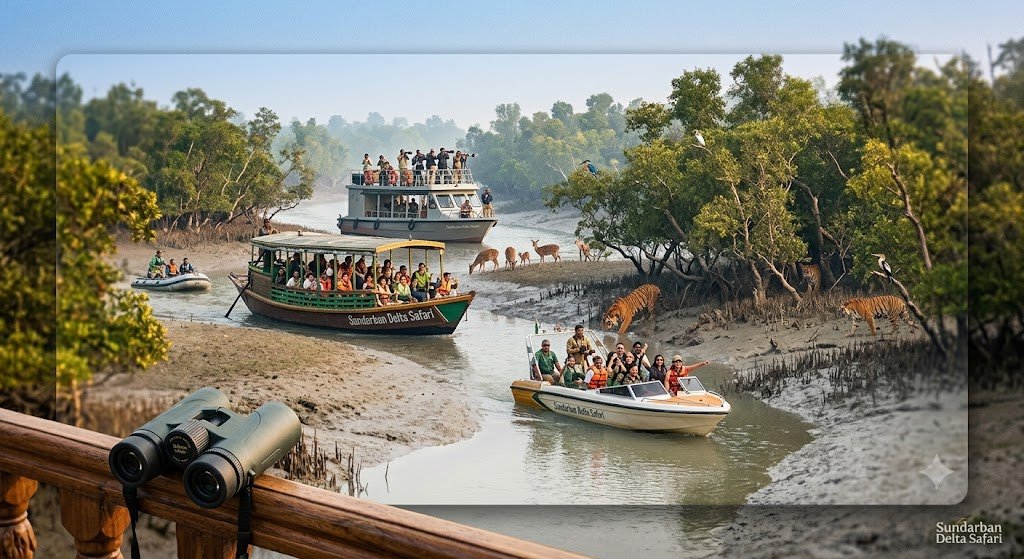
The Sundarbans is known for its mangrove forests, winding rivers and rich wildlife. But beyond the forest lies another important part of the region: its villages and the people who call this unique landscape home. Village life in Sundarban is closely connected to rivers, farmi...

The Sundarbans is known for its mangrove forests, winding rivers and rich wildlife. But beyond the forest lies another important part of the region: its villages and the people who call this unique landscape home.
Village life in Sundarban is closely connected to rivers, farming, fishing, local markets and seasonal work. Families have developed ways of living with tidal waterways, changing weather and the challenges of a coastal environment.
Today, tourism also creates opportunities for local guides, boat operators, accommodation providers, food suppliers and small businesses. When planned responsibly, Sundarban eco-tourism can help visitors understand local culture while supporting livelihoods and protecting the natural environment.
In this guide, we explore village life, traditional occupations, local food, cultural experiences and how travellers can enjoy the Sundarbans responsibly.
Village life in the Sundarbans is shaped by its geography. Many settlements are surrounded by rivers, tidal channels, agricultural land and mangrove landscapes. Water transport is important in places where communities are separated by waterways.
Daily routines vary between villages, but common activities include farming, fishing, small businesses, local trade, transport services and tourism-related work.
People also need to prepare for challenges such as cyclones, flooding, riverbank erosion and soil salinity. These conditions can affect houses, agricultural production, transport and household income.
Life in the Sundarbans is not the same everywhere. Some villages have stronger road connections and more developed tourism facilities, while others are more dependent on boats and local waterways.
Research on the Indian Sundarbans shows that many households rely on the surrounding ecosystem for resources and income. Fishing and crab collection are important livelihood activities in several communities, alongside farming and other work.
Source: Contribution of Mangrove Ecosystem Services to Local Livelihoods in the Indian Sundarbans.
The local economy includes a mix of traditional occupations and newer opportunities. Many households combine more than one source of income, particularly when work is seasonal.
Fishing is an important livelihood in many communities around the Sundarbans. Rivers and nearby waterways support fishing activities, subject to applicable regulations and local conditions.
Fish is also an important part of regional food culture. Local markets and food businesses connect fishing communities with consumers.
Agriculture remains important in suitable areas outside protected forest zones. Depending on local conditions, families may cultivate paddy and other crops.
However, saline water, cyclones, flooding and damage to agricultural land can make farming difficult. Crop choices and farming practices differ from village to village.
Some traditional forest-dependent workers, known as Mouals or Moulis, collect wild honey under applicable forest regulations. This work can be dangerous because of bee stings, tidal conditions and the risk of encountering wildlife.
Honey collection is a seasonal occupation, and not every village household depends on it.
Crab collection and other fishing-related activities provide income to some local families. These activities are affected by environmental conditions, market demand and relevant regulations.
Visitors should remember that natural resources are not simply tourist attractions; they are also connected to the everyday livelihoods of local people.
Tourism supports a range of local services, including boat operations, guiding, accommodation, cooking, transport, handicraft sales and other visitor services.
The income is not always steady throughout the year. Research on tourism and livelihoods in the Indian Sundarbans has found that tourism can benefit participating households, although opportunities and benefits may not be distributed equally across an entire village.
Source: Livelihood, Conflict and Tourism in the Sundarbans.
The Sundarbans has a rich cultural life influenced by its rural setting, Bengali traditions and close relationship with nature.
Bonbibi is an important figure in the cultural and religious traditions of many communities living around the Sundarbans. She is widely associated with protection for people who enter the forest to earn a living.
Some forest-dependent workers pray to Bonbibi before their journeys. These traditions reflect the uncertainties and dangers associated with working in a landscape inhabited by powerful wildlife.
Beliefs and practices differ between communities, and visitors should approach them respectfully.
Folk music and regional performances can be part of cultural events in some areas. Certain tour operators may include traditional performances in their itineraries.
However, a Jhumur performance or other cultural programme is not guaranteed in every village or tour package. Confirm the activity with the organiser before booking.
Generally we offer any one Jhumur Dance or Lokal Folk Dance in Delta Safari.
Local festivals and family celebrations are important parts of village life. Their forms and schedules vary according to community traditions and the calendar.
Visitors may encounter celebrations during a trip, but should not assume that a particular festival will be taking place on their travel dates.
Food offers another way to understand the culture of the Sundarbans. Rice and fish are important in Bengali cuisine, while recipes and ingredients vary according to household traditions, local availability and personal preference.
Depending on the establishment and meal plan, visitors may encounter dishes such as:
These are examples of Bengali food rather than a fixed menu for every Sundarban village.
If you want to experience local cuisine during your tour, ask your accommodation provider or tour operator which meals are included. Visitors with food allergies or dietary restrictions should communicate these in advance.
Eco-tourism focuses on experiencing natural environments responsibly while supporting conservation and, where possible, local communities.
In the Sundarbans, this can include guided boat journeys, learning about mangrove ecosystems, observing wildlife from authorised areas and understanding the lives of people who live near the forest.
Responsible eco-tourism should aim to minimise environmental damage and encourage visitors to respect wildlife, local customs and forest regulations.
The West Bengal government promotes the Sundarbans as a nature and wildlife destination. Its tourism information describes boat safaris and visits to designated attractions as part of the visitor experience.
Source: West Bengal Tourism — Sundarbans.
When tourism businesses source services locally and treat workers fairly, tourism can create additional livelihood opportunities.
Possible benefits include:
However, these benefits are not automatic. Tourism can also create waste, noise, pressure on waterways and unequal distribution of income. Responsible planning and fair participation by local communities are therefore important.
Research on Sundarban livelihoods recommends diversifying income through activities that put less pressure on natural resources, including appropriately managed eco-tourism.
Source: Livelihoods Dependence on Mangrove Ecosystems: Empirical Evidence from the Sundarbans.
If you want to understand the region beyond its wildlife, ask your tour operator about locally appropriate activities that may be available on your chosen itinerary.
A knowledgeable local guide may explain fishing, farming, transport and other occupations. These conversations can help visitors understand the relationship between village life and the surrounding environment.
Try Bengali dishes offered by your accommodation or a suitable local food provider. Ask about ingredients and meal arrangements before booking.
Where the itinerary permits, a visit to a local market can offer a glimpse of everyday trade and regional products. Ask before photographing vendors, customers or their goods.
A guide or authorised interpretation centre may help explain how mangroves support biodiversity, reduce some forms of coastal erosion and provide important ecosystem services.
Some tourism experiences involve local residents directly. When available, these can provide opportunities to learn from people who understand the region's history and livelihoods.
Do not assume that every activity is available in every village. Access, transport, local consent and the tour schedule all matter.
Although the region has remarkable natural beauty, its communities face serious environmental and economic challenges.
Severe storms can damage homes, crops, boats, roads and embankments. Recovery may require significant time and resources.
Riverbanks and channels can change over time. Erosion and flooding may threaten agricultural land, settlements and transport connections.
As per government official data in a year around 5 to 7 square kilometres area river dam are broken by flood and unofficially it’s more than 15 kilometres.
Saltwater intrusion and saline soil can make some forms of agriculture difficult. Conditions vary by location and can change following extreme weather events.
Fishing, farming, forest-dependent activities and tourism may all be affected by seasonal changes or environmental pressures. Many households therefore need more than one source of income.
For those reasons mostly they have to go out of their area in search of work.
Tourism can create jobs, but not every resident receives the same opportunities. Local participation, fair payment and transparent business practices matter if tourism is to provide broader benefits.
Understanding these challenges helps visitors see the Sundarbans as a living region rather than only a scenic holiday destination.
Visitors can help make tourism more respectful of both people and nature by following a few simple practices.
Responsible behaviour helps protect the quality of the visitor experience and the everyday life of local communities.
For travellers starting from Kolkata, a pre-arranged tour can simplify transport, accommodation and boat coordination.
Before choosing a package, consider the following:
You can explore available trips on the Delta Safari Sundarban package page. Check the latest itinerary, inclusions and prices directly before booking.
Village life varies across the region, but many communities depend on farming, fishing, local trade, transport and other seasonal or service-based work. Rivers and changing coastal conditions influence everyday routines.
Common livelihoods include fishing, crab collection, agriculture, small businesses, honey collection by some authorised forest workers, and tourism-related services.
Eco-tourism involves visiting natural areas responsibly, learning about the ecosystem and supporting conservation-minded activities. Where possible, it also creates opportunities for local communities.
Some itineraries may include suitable village visits or local experiences. Availability depends on the operator, location, permissions and local arrangements.
If you book a customized trip from Delta Safari, we can make a plan to explore the last village of Sundarban, how they survive, and the story of battle between tiger and local villagers. How their traditions are different from other traditions etc.
Bengali rice and fish dishes are common, alongside lentils, vegetables and other regional preparations like Alu Posto, Sorse Ilish, Sorse Pabda, Katla Kaliia, Vetki Paturi, ilish Paturi, Sukto, Chicken & Mutton Kosha, Basanti Polao etc. The food available to visitors depends on the accommodation and meal plan.
Tourism can create income for guides, boat crews, accommodation providers, cooks, drivers and small businesses. However, benefits vary and are not necessarily shared equally across all households.
Tourism also creates opportunities for local communities to sell traditional handicrafts, local food, honey and other locally made products to visitors. It can support small family-run businesses, encourage local employment and help preserve the unique culture and traditions of the Sundarbans.
Banabibi is deeply worshipped by the people of the Sundarbans as the guardian deity of the forest. Before entering the jungle, honey collectors, fishermen and woodcutters offer prayers to her, seeking protection from wild animals, especially the Royal Bengal Tiger. People believe that Banabibi protects those who enter the forest and helps them return home safely.
Communities generally face cyclones, flooding, riverbank erosion, saline soil and uncertain livelihoods. The severity of these challenges differs between locations.
Mostly they don’t get that much support from local governments due to remote areas.
Choose authorised operators, respect local customs, avoid littering, follow wildlife rules and consider using local services when practical.
Mostly in Delta Safari in our programme we hire Local Adibasi people for Jhumur dance & Folk dance
Available activities depend on the package and travel dates. Visit the Delta Safari package page and ask whether your selected itinerary includes a village visit or local cultural experience.
Conclusion: Discover the Human Side of Sundarban
Village life is an essential part of the Sundarbans story. The region's communities maintain livelihoods, traditions and connections to the natural environment while adapting to changing weather and coastal conditions.
Responsible eco-tourism can help visitors appreciate these connections and create opportunities for local service providers. Its success depends on respecting residents, protecting wildlife and ensuring that tourism benefits are shared fairly.
When planning your trip, look beyond the scenery. Learn about local food, livelihoods and traditions, and choose experiences that respect the people who call the Sundarbans home.
Plan your Sundarban holiday with Delta Safari. Explore the available Sundarban tour packages, compare itineraries and confirm the details before booking.